Investment real estate across the Treasure Valley. Acquisitions, dispositions, and MLS representation — flips, land, multifamily, SFH rentals, and buildable infill.
Off-market acquisitions and full MLS representation. Every deal gets the exit strategy that produces the best outcome for sellers and buyers alike.
Off-market direct sale or full MLS representation. Whichever path produces the best outcome for your property.
Investment properties brought to our buyer network first. Off-market and listed. The access serious Boise investors are looking for.
"Off-market or on-market — we connect the right properties with the right buyers. The path depends on the deal."
We cover all nine cities across the Treasure Valley. Each market has its own character, its own investment thesis, and its own opportunity set. Select a city to see how we think about it.
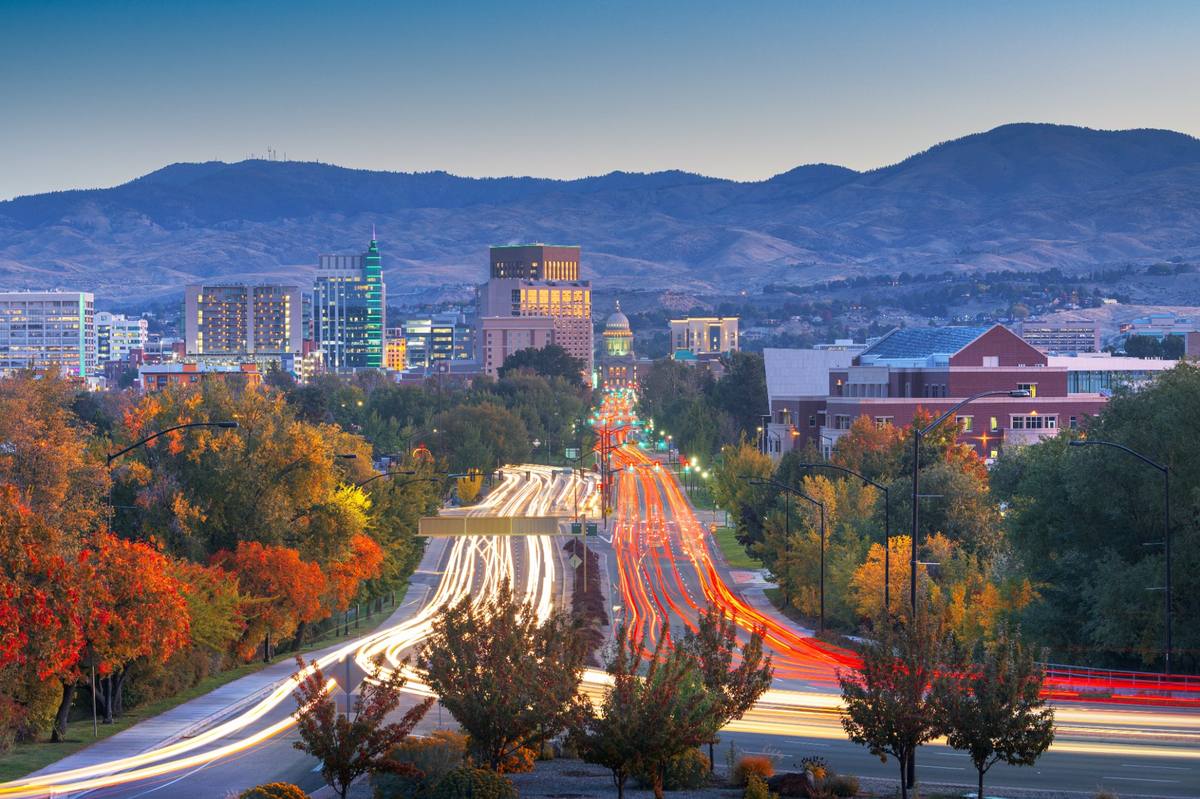
The state capital and anchor of the Treasure Valley. A fully built-out urban core where local knowledge, relationships, and sourcing capability are the only competitive advantages that matter.
Boise's population was estimated at 250,060 as of 2024, making it the largest city in Idaho and home to 44.8% of Ada County's total residents. The Boise metro area reached 482,000 in 2025, representing 1.26% growth from 2024. Since 2000, Boise proper has added 64,273 residents. Ada County is projected to reach 715,820 by 2050.
Idaho crossed 2 million residents in 2024 and is on track to reach 2.4 million by 2034. The Idaho Department of Labor projects a growth rate four times the national average through that period, with approximately 44% of statewide growth landing in the Boise metro. More than 74% of Idaho's population growth since 2020 has come from in-migration. Boise is the primary destination.
Boise ranked among the top 15 U.S. cities for job growth in 2025, driven by semiconductor manufacturing, technology, healthcare, and professional services. LinkedIn ranked it the number two fastest-growing metro for jobs and new talent. Unemployment sits at 3.6% against a national rate of 4.3%. Median home prices rose 11% from October 2024 to October 2025, compared to 1.4% nationally.
Boise's flip market is built around three distinct neighborhoods that each operate independently in terms of buyer profile, acquisition basis, and finish expectation. The Bench is the highest-volume market. The North End and East End historic districts command the highest ARVs in the Valley.
The Bench is the elevated plateau south of downtown, generally bounded by Americana Boulevard to the north, Federal Way to the south, and running from Cole Road west toward Five Mile. The housing stock is predominantly post-war construction from the 1940s through 1970s — dated kitchens, original mechanicals, and bones that respond well to full cosmetic renovation. Lot sizes are larger than the historic inner neighborhoods, meaning ADU potential exists on many parcels that previously had none. ARVs range from entry-level to premium depending on subarea, square footage, and finish level.
Distressed ownership on the Bench is well-represented in tax delinquency records and absentee owner lists. Many properties have been held by out-of-state heirs or long-term landlords for decades. Driving for dollars in the South Cole, Maple Grove, and Five Mile corridors consistently surfaces off-market leads that no list pull captures.
The North End Historic District is listed on the National Register of Historic Places. First platted in 1878 and developed through a twenty-five-year building boom beginning in 1891. Housing stock spans Victorian fixer-uppers, cottage bungalows, Queen Anne homes, and century-old craftsman houses along tree-lined streets. Harrison Boulevard bisects the neighborhood and is one of Idaho's most desirable residential streets. The historic designation adds complexity — work on contributing structures requires compliance with Boise's preservation guidelines and is subject to review. That complexity is why off-market access and deep neighborhood familiarity are prerequisites for working here.
The East End Historic District is a thirty-nine-block residential neighborhood designated as a local historic district by the City of Boise in 2004. Located east of downtown between the foothills and the Boise River. The predominant style is the Craftsman bungalow at 29% of the stock, alongside Queen Anne cottages, American Foursquare, and Mission Revival homes on lots typically 25 feet wide and 122 feet deep.
Warm Springs Avenue is listed on the National Register of Historic Places as a separate City of Boise Historic District. Some of Boise's most prominent residential properties line the street, many still heated by geothermal water through the Warm Springs Water District. The median real estate price in the Warm Springs Mesa and East End area exceeds $1,188,000 — in the top 2% of all Idaho neighborhoods by price.
Boise State University anchors rental demand in the southwest quadrant of the city. Neighborhoods within a mile of campus have maintained near-zero vacancy for years. SFH rentals in Boise proper target three-bedroom homes — the primary demand driver across all renter demographics in the city.
The most consequential change to SFH rental investing in Boise is the ADU opportunity created by the Modern Zoning Code, which took effect December 1, 2023. Prior to the code change, ADU permit applications averaged 3 per month. In the first three and a half months after the code took effect, that number jumped to 27 per month — a nine-fold increase. In 2024, the city approved 130 ADUs. In March 2026, Boise City Council unanimously approved a further round of ADU deregulation.
Current standards under S-29 (effective February 10, 2026): maximum size 900 square feet or the floor area of the primary home, whichever is smaller; maximum 2 bedrooms; no off-street parking requirement; owner-occupancy requirement eliminated in most zones; permitted in R-1A, R-1B, R-1C, R-2, and A-1 zones. For investors, properties with oversized lots, detached garages, or underutilized backyard space now carry a meaningfully different investment calculus than they did two years ago.
Boise multifamily fundamentals remain strong. The city approved 1,962 housing units in 2025, with the largest concentrations in the MX-5 and MX-3 zones near downtown. New construction starts are down over 60% from the 2023 peak, which will tighten conditions and support rent growth beginning in late 2025 and into 2026 according to a Spring 2025 property management industry survey.
Value-add opportunities concentrate in aging stock on the Bench and in older inner-ring neighborhoods where below-market rents and deferred maintenance create upside. Out-of-state 1031 exchange buyers from California, Washington, and Oregon continue to drive meaningful transaction volume in Boise multifamily — these buyers depend entirely on a trusted local operator to source, evaluate, and represent deals.
A consultant analysis commissioned by the City of Boise evaluated 15,000 parcels and identified room for 162,000 additional housing units. The city estimates demand for approximately 2,000 new units per year to keep pace with current growth — a pace it nearly matched in 2025.
Boise adopted its Modern Zoning Code in the summer of 2023, replacing a code in place since 1966. The code took effect December 1, 2023, and has been amended multiple times since. The current version is S-29, passed February 10, 2026 (Ordinance 2-26), with further amendments approved unanimously by Boise City Council in March 2026. All standards below reflect the current code as of Spring 2026 and should be verified at codelibrary.amlegal.com/codes/boiseid before any development decision.
R-1A, R-1B, R-1C (Traditional Residential): Single-family detached homes as the primary use. ADUs permitted in all three. Duplexes allowed where the project constitutes infill, is located on a corner lot at the intersection of two local streets, or is on an arterial or collector street. In R-1C, triplexes and fourplexes are permitted where income-restriction and sustainability standards are met. Minimum lot size: 3,500 square feet — reduced from 5,000 under prior code.
R-2 (Compact Residential): Per the Boise Modern Zoning Code User Guide: compact neighborhoods feature small lots, an interconnected network of sidewalks and streets, and in some cases alley-loaded garages. Detached single-family homes on small lots are predominant but a variety of housing types including duplexes, triplexes, townhomes, apartments and condominiums could be allowed. Residential densities typically fall between 6 and 15 units per acre. R-2 covers 6% of the total land in the city, including most of the North End.
R-3 (Multi-Residential): Higher-density residential permitting apartments and larger multifamily. A 50% parking reduction is available for projects within a quarter mile of MX-3, MX-4, or MX-5 zoning that designate 25% of units affordable at 60% AMI for 50 years and meet clean energy and water savings standards.
The Modern Zoning Code formally introduced the Cottage Village as a defined housing type: a residential development that combines a group of small individual single-family dwelling units, oriented around an open space for communal use by the residents of the development. This format allows multiple small structures on a single lot organized around shared open space — a form that produces more units per acre than standard single-family development.
Co-housing is also defined: a shared private common space containing at least 10% of the project area, with an optional shared facility for communal cooking and dining of no more than 2,000 square feet. Live-work units — an integrated living and working space with the living area above or behind the working space — are permitted along commercial corridors adjacent to residential zones.
The Modern Zoning Code operates a points-based incentive system. Developers earn points by meeting defined affordable housing or sustainable building standards, then redeem points for specific zoning flexibilities. The Neighborhood Housing Incentive (residential zones) allows up to 6 points for setback reductions, parking reductions, increased lot coverage, and additional density. Properties in designated Strategic Infill locations — within 300 feet of a collector road or minor arterial, or within a quarter mile of MX-3 zoning, with improvement value not exceeding 25% of assessed value — qualify for additional flexibility.
The Urban Housing Incentive (mixed-use and higher-intensity zones) offers up to 5 points. In March 2026, Boise City Council unanimously restructured these incentives after city analysis showed low developer utilization. The revised framework reduces income restriction thresholds and lowers the percentage of required restricted units to make the program financially viable for smaller operators.
Minor land division — the lower-cost path to parcel subdivision — now carries affordability requirements under the new code. Full subdivision process adds between $20,000 and $30,000 in additional design and compliance costs according to active Boise infill developers who testified to city council in March 2026. In 2025, the city approved 1,962 housing units, with 1,299 in the areas specifically targeted for density in the Modern Zoning Code.
Idaho's fastest-growing city. Active SFH flip market, strong build-to-rent and long-term rental fundamentals, a designated Opportunity Zone in Old Town with federal tax incentives, and a westward expansion land corridor competing with national builders.
Meridian's flip market is active and buyer-deep. Subdivisions built between 1990 and 2010 — particularly in north and central Meridian along Fairview Avenue, Cherry Lane, and Ustick Road — carry dated kitchens and baths that respond well to full cosmetic renovation.
The buyer pool skews heavily toward first-time buyers and growing families seeking Meridian's school district. Finished product in good school districts sells quickly and with multiple offers. Neighborhoods near Lake Hazel Road in south Meridian and the older subdivisions between Ten Mile Road and Linder Road offer the best combination of acquisition cost and resale demand for operators working at volume.
Distressed inventory in Meridian is thinner than in Nampa or Caldwell but exists through absentee ownership and pre-foreclosure sourcing. Long-term absentee landlords who purchased in the early 2000s and have not maintained properties represent the most consistent source of off-market flip opportunities in the city.
Meridian is the strongest long-term SFH rental market in the Treasure Valley on a fundamentals basis. Population growth has been consistent, school quality is high, and the renter demographic includes a deep pool of two-income professional households who prioritize quality.
Build-to-rent has become an active strategy in Meridian. Developers are building dedicated rental communities — particularly in south and southwest Meridian where land is more accessible — targeting households that want a single-family home but are not yet ready to purchase. These developments validate the depth of the renter pool.
Properties with larger lots in central and north Meridian deserve evaluation for ADU potential under Meridian's development standards. Standards and processes are specific to Meridian's city code and should be verified parcel by parcel.
Meridian's STR market benefits from its position as the Valley's most family-friendly city. Demand is event-driven — Meridian occupancy is boosted by Boise events, BSU football, concerts, and conventions. Properties near the Village at Meridian and in north Meridian within 20 minutes of downtown perform best. Verify STR permitting requirements with the City of Meridian before acquisition.
Meridian is seeing increasing multifamily development along the Eagle Road and Ten Mile commercial corridors. Cap rates on stabilized small multifamily generally run from 5.75% to 7.25%. The strongest demand concentrates in older central Meridian neighborhoods within walking or biking distance of downtown Meridian and Main Street.
Value-add multifamily exists in aging two-to-four-unit properties in central Meridian where in-place rents are below market. These properties are typically owned by long-term landlords who have held rents flat for years and are at a decision point.
Multifamily STR plays in Meridian work best as individual unit strategies within small owner-operated buildings. Two-bedroom units near the Village at Meridian corridor perform well as midterm rentals targeting corporate relocation and traveling professionals arriving at Meridian's growing tech and healthcare employer base. Verify Meridian's current STR ordinance for permit requirements and any density restrictions before underwriting.
Meridian has one designated Opportunity Zone covering a census tract in and around Old Town downtown Meridian with an estimated population of 7,600 — approximately 7% of the city's total population. This designation was part of the original 2018 round under the Tax Cuts and Jobs Act of 2017.
Old Town Meridian is generally bounded by Main Street, Meridian Road, Pine Avenue, and the Union Pacific rail corridor. The area includes historic commercial buildings, older residential stock, and underutilized parcels within walking distance of the City Hall campus and Meridian's emerging downtown restaurant and retail district. Old Town Lofts was among the first announced Opportunity Zone projects in Idaho.
The Opportunity Zone program was made permanent by the One Big Beautiful Bill Act signed July 4, 2025 — creating OZ 2.0 with rolling ten-year redesignations starting in 2027. OZ 1.0 designations, including Meridian's, expire December 31, 2028. Governors begin nominating new tracts July 1, 2026.
Capital gains deferral: Investors who roll prior gains into a Qualified Opportunity Fund (QOF) defer tax on those gains until December 31, 2026.
Basis step-up: A 10% basis step-up applies after a five-year hold, reducing the deferred gain ultimately subject to tax.
Zero tax on appreciation: If the OZ investment is held for at least ten years, any appreciation in the investment itself is permanently excluded from capital gains taxation. This is the most powerful benefit.
Idaho conformity: Idaho conforms to federal OZ tax benefits. Investors capture both federal and state tax advantages — unlike California, which does not conform.
Projects must meet the substantial improvement test for existing structures (invest at least 100% of adjusted basis in improvements) or involve new construction. Consult qualified tax counsel before structuring any OZ investment.
From an investment standpoint, the Meridian OZ creates a rare alignment: a city actively investing in downtown infrastructure, a rapidly appreciating market, and federal tax incentives that reward long-term capital. Mixed-use development combining ground-floor commercial with workforce housing above is the highest-probability use type for Old Town parcels at current market conditions.
Meridian's infill opportunity set is smaller than Boise's but real. Older commercial properties on Meridian Road and Main Street represent the most viable infill plays for adaptive reuse and mixed-use redevelopment. Oversized residential lots in central Meridian — particularly in neighborhoods platted before 1990 — are worth analyzing for lot split potential.
The more significant land play is Meridian's westward expansion corridor. Development pressure is pushing south along Ten Mile Road toward Amity Road and west toward the Kuna-Meridian boundary. Regional and national builders — including Brighton, Toll Brothers, and Taylor Morrison — compete actively for larger parcels in south and southwest Meridian. Off-market sourcing through agricultural landowners and absentee parcel holders is the only credible path to acquiring development land at a basis that makes sense before it becomes publicly contested.
Smaller infill development plays exist in south Meridian near Lake Hazel Road and in west Meridian along Linder and Black Cat Roads, typically in the five to twenty-acre range where national builders do not compete and local operators can move faster at lower overhead.
Canyon County's largest city and the strongest yield market in the Treasure Valley. NNU, the Idaho Center, and Amazon anchor rental demand. Lower acquisition costs, active lot-split and duplex plays, and Canyon County annexation land make Nampa the most accessible cash-flow market in the Valley.
Nampa is the highest-volume flip market in Canyon County. The housing stock includes a substantial base of pre-1990 construction in need of cosmetic renovation, and acquisition costs are meaningfully lower than in Boise or Meridian.
The strongest flip corridors are in central Nampa between Nampa-Caldwell Boulevard and 12th Avenue Road, and in the older residential blocks near Northwest Nazarene University and Nampa High School. Properties in these areas are close to schools, transit, and shopping — which drives the resale velocity that flip economics depend on.
Distressed inventory sourcing is productive across all six seller profiles. Tax delinquency records, absentee ownership filters, and lis pendens filings in Canyon County surface motivated sellers at rates higher than the Ada County markets. Lower competition from institutional buyers means off-market acquisition is more achievable here than anywhere else in the Valley.
Nampa consistently delivers the strongest cash-on-cash returns for buy-and-hold SFH investors in the Treasure Valley. Acquisition costs are $75,000 to $125,000 below comparable properties in Boise or Meridian, and gross rent multipliers are more favorable than any other market.
Northwest Nazarene University is located at 623 S. University Boulevard in Nampa and enrolls approximately 1,774 students. Off-campus student demand is consistent throughout the academic year. Properties within a half-mile of NNU on the north and west sides of campus carry above-average demand and below-average vacancy for rental investors.
The College of Western Idaho serves Canyon County with a Nampa campus on Garrity Boulevard, generating commuter student demand for affordable housing nearby. Saint Alphonsus Regional Medical Center is one of Canyon County's largest employers, creating steady rental demand from traveling nurses and early-career medical professionals. The Idaho Center sports and entertainment complex and the Amazon fulfillment center on Freight District Road have collectively added thousands of permanent jobs to the Nampa employment base since 2020.
Nampa's STR market is emerging. The strongest STR demand concentrates near the Idaho Center and in properties with easy freeway access for event visitors traveling between Nampa and Boise. ADU potential is meaningful — many older residential lots in central Nampa are large enough to support a detached backyard unit. Verify current ADU regulations with Nampa Planning and Zoning before underwriting.
Nampa offers the best cap rates on small multifamily of any city in the Treasure Valley. Two-to-four-unit properties and smaller apartment buildings trade meaningfully higher than comparable properties in Boise. Price per unit is lower than any other Ada or Canyon County market.
The NNU corridor produces some of the most consistent multifamily demand in Nampa. Four-plexes and smaller apartment buildings within a mile of campus benefit from a reliable student tenant base. The Victory and Kings Roads submarket hosts a large existing apartment complex of approximately 300 units and has seen additional new construction, signaling developer confidence.
Multifamily STR plays in Nampa work best as midterm rental strategies targeting traveling workers and project-based professionals. The industrial and logistics employment base along the freeway corridor creates demand for furnished monthly rentals that is underserved by hotel supply. Two-bedroom units in well-located smaller buildings can perform better as furnished midterm rentals than as traditional long-term leases.
Nampa's older residential neighborhoods contain a significant inventory of large lots — many platted before modern subdivision standards — that are viable candidates for lot splits, minor land divisions, ADUs, and duplex conversion.
The City of Nampa has made incremental code changes favorable to small-scale density, including revised ADU standards and reduced parking requirements for infill projects on collector streets. Duplexes are permitted in a range of Nampa residential zones with administrative approval. The practical effect is that many single-family lots in established Nampa neighborhoods can now support two units where previously only one existed.
Teardown candidates exist in central Nampa where older homes sit on lots large enough to support replacement density. The combination of a depressed improvement value and a lot size supporting two or three units can produce compelling returns when acquisition basis is right. Driving for dollars in the older central residential neighborhoods consistently surfaces these before they reach any list.
Local code changes in Nampa have made small-scale infill more viable than at any prior point. Duplexes by right, revised ADU standards, and reduced parking for infill parcels on collector streets — verify current standards with Nampa Planning before acquisition.
Nampa is actively annexing agricultural land from Canyon County as the city's growth boundary expands north and south. The most active annexation zones are along Amity Road to the south and in the corridor between Nampa-Caldwell Boulevard and the Boise River to the north.
Off-market sourcing of these parcels requires direct relationships with agricultural landowners. BatchLeads absentee and long-hold filters applied to Canyon County parcel data surface owners whose properties are inside or adjacent to the Nampa area of impact. These conversations are slow and relationship-based, but operators who build them ahead of formal annexation activity capture the best basis.
Smaller infill development in south Nampa — the Lake Lowell Avenue and Karcher Road corridors — offers plays that compete with local rather than national builders. Entry lot sizes and project scales in these areas are below the threshold that attracts larger regional operators.
The most intentionally revitalized city in the Treasure Valley. Indian Creek Plaza drew 3 million visitors in 2024. A new comprehensive plan passed 2025 enables density near services. Steunenberg historic district offers Victorian-era housing at prices well below comparable Boise neighborhoods. The westward growth wave is reaching Caldwell.
Understanding Caldwell as an investment market requires understanding what the city has done to itself over the last decade — deliberately, expensively, and successfully. The transformation of downtown Caldwell from a neglected corridor into what Destination Caldwell calls 'Idaho's premier gathering place' is one of the most intentional urban revitalization stories in the Mountain West.
The Indian Creek Plaza opened in 2018 after the city daylighted Indian Creek — a waterway that had been buried and used as industrial drainage since the 1950s. The city committed $15 million to the combined creek restoration and plaza project. In 2024, Indian Creek Plaza hosted over 300 programmed days of events and drew over 3 million visitors into downtown Caldwell.
In June 2025, the Caldwell Chamber of Commerce secured $115,000 from the city to rehire Roger Brooks and his Destination Development Association for a second round of strategic planning. Brooks presented the 'Envision Central Caldwell 2050' master plan in January 2026. Key elements include a 12-foot wide, three-mile Indian Creek Promenade trail from the Boise River through downtown, a recreation and sports district, and a proposed whitewater park along the Boise River.
Private development is following. The Tilian — a 142-unit apartment building with ground-floor retail at Seventh Avenue and Main Street — is under construction in downtown Caldwell as of early 2026. Downtown business growth has prompted city planners to propose a 500-space parking garage.
Caldwell ranked 14th fastest-growing city in the United States. Three million visitors to Indian Creek Plaza in 2024. A city that could not give away downtown buildings a decade ago is now building a parking garage to handle demand.
Caldwell has the most distressed residential inventory of any city in the Treasure Valley, creating the most accessible flip acquisition environment for operators who can execute at lower price points.
Flips finished to a quality level commensurate with the price point, close to the improved downtown core, sell faster than those in outlying areas. The Indian Creek and Main Street corridor is seeing genuine buyer demand from professionals and younger households who could not afford Nampa or Meridian and see Caldwell's downtown as a real amenity.
Caldwell has three designated historic districts: the Steunenberg Residential Historic District (HD-1 overlay), the downtown local historic district, and the North Caldwell Historic District. The Steunenberg district is established as an overlay zone under Caldwell City Code Section 10-01-03 and requires a Certificate of Appropriateness for any exterior alterations, new construction, additions, demolition, and changes of use within its boundaries.
Work within the Steunenberg district must comply with the Caldwell Historic Preservation Commission's design guidelines and the Secretary of the Interior's standards for rehabilitation. Staff-level certificates process more quickly than commission-level review — contact Caldwell Planning and Zoning at the outset to classify the scope of work before contracting. Interior work is exempt from the Certificate of Appropriateness requirement.
For operators experienced with historic work, the Steunenberg district offers some of Caldwell's best-preserved Victorian and craftsman housing stock at acquisition prices well below comparable historic districts in Boise — with an improving location story as the downtown revitalization compounds.
Caldwell delivers the highest gross yields on SFH rentals of any city in the Treasure Valley on a price-to-rent basis. At acquisition prices $50,000 to $100,000 below comparable Nampa properties, the cash-on-cash math is more favorable here than anywhere else in the Valley.
The College of Western Idaho serves Canyon County with a main Nampa campus and a Caldwell Workforce Training Center. CWI's student population is heavily commuter-based, creating demand for affordable rentals in both Nampa and Caldwell. Caldwell rental properties within reasonable distance of the Karcher Road corridor are positioned to serve this demographic.
The downtown Caldwell revitalization is beginning to register in rental demand. Professionals and young households discovering Caldwell's improving downtown as a more affordable alternative to Nampa or Meridian have driven above-average demand and below-average vacancy for properties within walking or biking distance of Indian Creek Plaza.
Caldwell's STR market is very early stage. Indian Creek Plaza and downtown event programming draw Valley-wide visitors, and the Idaho Roundup and Caldwell Night Rodeo draw significant crowds annually. Properties within walking distance of the plaza and event center have STR potential that did not exist five years ago. Underwrite STR income conservatively and verify Caldwell's current STR ordinance before acquisition.
Caldwell adopted a new comprehensive plan in early 2025 — the most significant land use policy change the city has made in a generation. Key changes include allowing commercial uses at major intersections in areas currently zoned residential, establishing nine place type categories with varying density allowances, and adding density bonuses aligned with the comprehensive plan's place type characteristics.
The code amendments passed April 21, 2025 (Ordinances 3661 and 3662) updated zoning district purpose statements and accessory structure standards. The 2025 update also consolidated all provisions for the three historic districts — Steunenberg residential, downtown local, and North Caldwell — into a single code section for clearer navigation.
Minor land divisions in Caldwell offer one of the most accessible small-scale development plays in the Valley. Older residential lots in central Caldwell — particularly in R-2 and R-3 zones near downtown — are large enough to support additional units without a full subdivision process. Low acquisition costs, improving downtown fundamentals, and a new comprehensive plan that supports density near services create a favorable environment for detail-oriented infill operators.
Caldwell's 2025 comprehensive plan allows commercial uses at major intersections in residential areas. This is a material change that creates mixed-use development opportunities that did not exist under prior code.
Caldwell is the westernmost anchor of the Treasure Valley growth corridor. As growth that first hit Boise, then Meridian, then Nampa, continues westward, Caldwell's agricultural land converts to development land. The city is actively annexing from Canyon County and has the infrastructure investments and comprehensive plan to support continued growth.
Agricultural parcels in the Caldwell area of impact — the territory outside city limits that the city expects to eventually annex — represent some of the most affordable large-parcel opportunities in the Treasure Valley. Getting into conversations with long-hold agricultural families before the formal annexation wave requires relationship-based sourcing that no list pull replaces. BatchLeads long-hold and rural parcel filters applied to Canyon County data are the starting point.
The highest-income residential market in the Treasure Valley. Custom builders, executive relocators, and out-of-state buyers specifically target Eagle addresses. Limited distressed inventory means every deal requires active sourcing — but margins on well-executed renovations and premium rentals justify the work.
Eagle is the premium flip market of the Treasure Valley. Renovated product trades from $500,000 to $900,000 and above in the core residential neighborhoods, with the highest ARVs concentrated in established areas north of State Street between Eagle Road and Horseshoe Bend Road.
The flip opportunity in Eagle is defined by precision rather than volume. Distressed inventory is thin and the gap between a well-executed renovation and a poor one is visible at these price points. Operators who source discreetly, underwrite accurately, and execute at a high finish level find Eagle's margins compelling. Those who cannot find the price point unforgiving.
Eagle SFH rentals attract the highest-income renter demographic in the Valley. The renter profile includes corporate relocators arriving at Boise's tech and healthcare employer base, executives in transitional housing while building or purchasing, and professional households who want Eagle's lifestyle without committing to ownership.
Vacancy in Eagle quality SFH rentals is consistently low. The combination of constrained rental supply — Eagle has relatively few investor-owned rentals compared to its owner-occupied base — and high-income demand from relocators creates a favorable landlord environment. Investors who acquire well-maintained or recently renovated single-family homes in Eagle's core benefit from both income stability and strong appreciation.
Eagle STR demand comes from families visiting for Boise sports tournaments and BSU events, corporate visitors, and out-of-state investors touring the market. High-quality properties with Greenbelt access or Eagle Road proximity perform well for both STR and midterm rental. ADU potential exists on Eagle's larger residential lots — verify Eagle City code on current ADU standards before acquisition.
Eagle's land market is among the most active in the Valley for high-value residential and infill plays. Custom home builder demand for premium lots within Eagle city limits is consistent, driven by out-of-state relocators who specifically request Eagle addresses.
Infill plays within Eagle proper are high-value when available. Oversized lots near Eagle Road, State Street, and the downtown core occasionally become available through estate sales and long-held family properties — builders who know the Eagle market move on them within days of availability.
The growth corridor extending northwest from Eagle toward Star along Highway 44 is where builders and developers have been actively acquiring parcels. Agricultural land on the northwestern edge of Eagle's area of impact, toward Beacon Light Road, represents the longer-horizon development play — in the path of growth, targeted by builders who learned from watching the Meridian and Star corridors develop before them.
Eagle has limited existing multifamily inventory relative to the rest of the Valley, which creates above-average rent and occupancy for what does exist. New multifamily development in Eagle has been constrained by land cost and community preferences toward lower-density residential. Cap rates on existing multifamily run from 5.5% to 7.0% and vacancy is among the lowest in the Valley.
The opportunity in Eagle multifamily is primarily through acquisition of existing small properties — two-to-eight-unit buildings in central Eagle with in-place rents below market. These properties rarely list publicly. They come to market through estate sales, absentee owner outreach, and agent relationships.
A fast-growing small city on the Highway 44 corridor between Meridian and Caldwell. Star's growth has been builder-driven, and the investment thesis follows accordingly — land plays ahead of infrastructure, appreciation-focused SFH hold, and early-stage flip opportunities as the buyer pool deepens.
Star is primarily a builder and land play. The city's growth along the Highway 44 corridor between Meridian and Caldwell has been rapid — population more than doubled over the past decade — and the development pipeline remains active.
Off-market land sourcing in Star requires focusing on agricultural landowners and long-hold rural parcel owners who have not yet engaged with the development community. Infrastructure expansion has been the critical enabler — city water and sewer extensions have reached progressively further along the Highway 44 corridor, converting agricultural land to development-ready status at an accelerating rate.
Star SFH rentals are primarily an appreciation play rather than a cash flow play. Rents are not as strong as Nampa or Caldwell on a yield basis, but the appreciation trajectory and growth story of the surrounding corridor make long-term holds compelling for investors who can carry the property on neutral or mildly negative cash flow.
Families seeking Star's school district, larger lots, and a quieter environment are the primary renter demographic. Vacancy is low because the rental supply is thin — most Star housing is owner-occupied, and investors who hold rentals here face limited competition from other landlords.
Star's flip market is earlier stage than the core Valley markets. ARVs on renovated product run from $380,000 to $525,000 depending on location, size, and finish level.
Older residential inventory in central Star — along the State Highway 44 commercial corridor and in established neighborhoods north and south of downtown — represents the primary flip opportunity. These properties sit in the older core of a city building rapidly around them, creating a favorable demand environment for renovated move-in-ready product at a competitive price point.
One of the last affordable corridors near Boise with genuine scarcity constraints. The Birds of Prey National Conservation Area limits southward expansion, concentrating growth and supporting appreciation. Cash-flow-focused SFH investors and land buyers positioning ahead of the northern growth wave are the primary investor profiles here.
Kuna is one of the last affordable markets in the Treasure Valley with genuine proximity to Boise and Nampa. Investors seeking cash flow over appreciation find Kuna's fundamentals compelling.
The Birds of Prey National Conservation Area south of Kuna creates a natural boundary that limits southward expansion. This scarcity dynamic concentrates demand and has historically supported price appreciation as inventory has stayed relatively constrained — one of the few natural scarcity factors in a Valley where development can otherwise expand in most directions.
Kuna is not a primary STR market, but properties with access to the Snake River and the Birds of Prey area attract outdoor recreation visitors and hunters who need housing near the canyon. This is a niche segment, not a volume play.
Kuna's viable development land sits to the north toward the Nampa and Meridian growth corridors. Builders and developers have been active along the Kuna Road and Deer Flat Road corridors, constructing subdivisions targeting buyers seeking affordable single-family ownership within commuting distance of the core Valley employment base.
Agricultural parcels on Kuna's northern edge — those with road access and utility availability along Kuna Road and Deer Flat Road — represent the most actionable land plays. BatchLeads long-hold filters and in-person relationship building with local agricultural contacts is the most effective sourcing approach.
Kuna's flip market is thin but consistent. ARVs on renovated product run from $300,000 to $400,000. The buyer pool is first-time homebuyers and younger families seeking affordable ownership with reasonable commutes to Nampa and Boise. Distressed inventory exists through absentee ownership and pre-foreclosure sourcing, and competition from other operators is lower than in any other Ada County market.
The western edge of the Treasure Valley's developed corridor. Middleton serves buyers seeking acreage, rural character, and the lowest land prices in the region within commutable distance of Nampa and Caldwell. A longer-horizon market for patient investors positioning ahead of infrastructure extension.
Middleton's primary investment thesis is land and acreage. The city sits at the western edge of the Treasure Valley's developed corridor, attracting buyers who seek larger parcels, rural character, and lower price per acre than any other area near the core markets.
Long-hold landowners in the Middleton area are beginning to encounter development pressure from the westward march of the growth corridor. Investors positioning now at today's prices ahead of infrastructure expansion are making bets that have paid off in every prior wave of Valley growth. Sourcing in Middleton is entirely relationship-based — these are agricultural families who have owned land for generations and are not responding to direct mail the way urban absentee owners do.
Middleton has a small but consistent rental market primarily serving agricultural workers, families relocating to the Canyon County area, and households seeking larger lots at affordable prices. Three-bedroom rentals in Middleton lease from $1,300 to $1,600 per month. The investor pool is thin, which means quality rentals at fair prices lease quickly despite the rural location.
An independent city entirely surrounded by Boise along the Boise River. Garden City's permissive mixed-use zoning, Greenbelt access, and a decade of arts district and restaurant investment have made it one of the most interesting infill and redevelopment markets in the metro. Dense, urban, and still underpriced relative to adjacent Boise.
Garden City is a small incorporated city entirely surrounded by Boise along the Boise River — approximately 3,200 acres of mixed industrial, commercial, and residential land within the Boise metro. Its zoning is more permissive for mixed-use and higher-density development than most of Boise proper, making it a target for developers who understand its specific regulatory environment.
The Boise River corridor through Garden City has seen significant private investment over the past decade. Restaurant, retail, and mixed-use development along Whitewater Park Boulevard and the Riverside Hotel corridor has transformed Garden City from an industrial backwater into one of the Valley's most interesting urban neighborhoods. The concentration of independent restaurants, breweries, and creative businesses has driven residential demand for housing within or near Garden City.
Infill plays in Garden City require understanding the city's specific zoning code, which permits housing types and densities not available in most of Boise proper. Mixed-use development with ground-floor commercial and residential above, higher-density residential, and live-work units are all permitted in appropriate zones along the commercial corridors. Garden City operates its own planning and zoning process, separate from Boise's Modern Zoning Code.
Garden City is surrounded by Boise — it captures Boise demand fundamentals at a price discount. Developers who understand its zoning have built some of the Valley's most compelling infill projects here.
Rentals in Garden City command a premium relative to comparable properties in outlying markets, driven by Boise River Greenbelt access, proximity to downtown Boise, and the neighborhood character of the arts and brewery district.
Small multifamily in Garden City performs well. Cap rates reflect the city's position within the Boise metro orbit but the neighborhood trajectory makes income only part of the return calculation for investors with a longer hold horizon.
Garden City's STR market benefits from its position as the Valley's most unique urban neighborhood. Visitors seeking a Boise experience close to downtown without the Boise price point find Garden City compelling. Properties near the river corridor with Greenbelt access and proximity to the restaurant cluster perform well on STR platforms. Garden City has its own STR permitting process — verify requirements directly with Garden City Planning before underwriting any STR acquisition.
ADU potential exists on many Garden City residential parcels. Garden City's zoning has historically been more permissive than Boise for accessory structures in appropriate zones. Verify current Garden City ADU standards directly with the city — Garden City operates independently from Boise's Modern Zoning Code.
Teardown and lot-split plays are active in Garden City's residential areas. Older homes on larger parcels near the river corridor have been replaced with duplexes, triplexes, and small apartment buildings as investors and builders recognize the premium that proximity to the Boise River and the arts district commands at resale or on the rental market.
Off-market private sale or full MLS listing. We handle both with the same professionalism and focus on your outcome. You choose the path that works best for your situation.
We work across every investment class in the Treasure Valley. No ceiling on deal size. If it's an investment property, we want to talk.
We source and list investment properties across the Treasure Valley. Our buyer network gets first access to deals that match their criteria.
We don't blast deals to a mass list. When a property comes in, we match it to the investors whose criteria it fits and call them directly. You only hear from us when we have something worth your time.
The Treasure Valley has been one of the top-performing investment markets in the Mountain West for a decade. We've been here the whole time — and we know where the next deals are coming from.
Tell us your investment criteria and we'll reach out when we have a deal that fits. No noise. Just the right deals at the right time.
Tell us your criteria. We'll bring you properties that match — off-market and on-market — before the rest of the market sees them.
I'm a real estate investor and agent based in Boise, Idaho. Born and raised in Boston, I've lived all over the United States — eventually making my way to Idaho from Alaska. That background gave me a broad perspective, but Idaho is where I built my business, my family life, and my long-term vision.
Before real estate, I served as an Officer in the United States Army. Paratrooper, infantryman, and veteran of the Global War on Terror. My time in the Army shaped the way I approach business and life. It taught me discipline, resilience, leadership, and the ability to make decisions under pressure. Those lessons still drive how I operate today.
I started investing in real estate in 2013 and built my experience from the ground up — wholesaling first, then house hacking with my VA loan, then live-in flips, and eventually full-time real estate in 2021. Since then, I've built a business centered around investment opportunities and value creation across multiple asset types and strategies.
Today my work focuses on flips, multifamily, investor representation, land development, best use analysis, private capital raising, ground-up projects, and historical district redevelopments. Because I've operated as an investor myself for over a decade, I bring a practical lens to every deal. I understand how to evaluate risk, identify upside, structure opportunities, and help clients make sound decisions based on real numbers and real-world execution.
Outside of business, I'm a father first. My sons, Anthony (14) and Dominic (11), are the most important part of my life. We spend a lot of our time together enjoying Idaho and everything it offers — outdoors, active, and making the most of the time we have together.
Real estate for me has never just been about transactions. It's about building freedom, creating opportunity, and helping people make smart moves with confidence.
Our read on the Treasure Valley — asset by asset, city by city. Investment analysis without the fluff.
New construction starts are down over 60% from the 2023 peak. Here's what that means for existing stock and where the value-add opportunity is concentrated right now.
We run both paths constantly. The data on price outcomes, days to close, and transaction costs tells a more complicated story than the standard off-market sales pitch.
National builders compete on the large parcels. The off-market opportunity is in the 5 to 25-acre range where local operators can move faster at lower overhead.
Nampa, Caldwell, Kuna, and Meridian each have a different yield profile. A direct comparison of acquisition basis, rents, vacancy, and cash-on-cash returns across all nine cities.
Old Town Meridian's OZ designation expires December 31, 2028. OZ 2.0 redesignations begin in 2027. Here's what that means if you're underwriting a project in the corridor today.
Highest upside in Canyon County. Fastest appreciation over five years. And still the most underestimated market in the Treasure Valley. Here's the thesis.
Market analysis is useful. A direct conversation about your criteria and the current opportunity set is better.
Whether you have a property to sell, a strategy to deploy, or a question about the market — we respond directly and we respond fast.
Distressed, probate, and off-market single-family properties sourced and moved to active flippers and value-add investors before they hit public markets.
The best flip acquisitions don't come from the MLS. They come from direct relationships with motivated sellers, probate attorneys, and long-term absentee owners who are ready to move on.
"The flip market in the Treasure Valley is active. The deals are there — they're just not on the MLS. That's where we operate."
Raw parcels, agricultural land, development-ready sites, and annexation opportunities across all nine cities. The most complex — and often the most rewarding — asset class we work.
National builders compete aggressively for large entitled parcels. The off-market opportunity is in the 5 to 25-acre range — where local operators move faster and at lower overhead than publicly traded builders.
"Land is the most local asset class. You can't underwrite a Treasure Valley land deal from out of state. The value is in knowing which parcels are positioned for conversion — and which ones aren't."
2 to 20+ unit properties across Boise, Nampa, Caldwell, and Meridian. Strong rental demand, stable occupancy, and a value-add opportunity set in aging stock with below-market rents.
The Treasure Valley multifamily market is undersupplied relative to population growth. New construction starts are down over 60% from the 2023 peak, which will tighten conditions into 2026 and support rent growth in existing stock.
"The multifamily opportunity in the Treasure Valley is in the aging stock — long-term landlords with below-market rents who are at a decision point. We find those before they hit the market."
Buy-and-hold single-family rentals — the most abundant asset class in the Valley and the backbone of investor acquisition pipelines from Boise to Caldwell.
The Treasure Valley SFH rental market has a wide range of yield profiles by city. Canyon County — Nampa, Caldwell, Kuna — offers stronger cash-on-cash returns at lower acquisition cost. Ada County offers appreciation-led returns with a deeper renter pool.
Current market rents across the primary SFH rental markets — Q2 2025 data.
"The SFH rental market across the Treasure Valley is as diverse as the cities themselves. A Nampa buy-and-hold operates very differently from a Boise ADU play. We know both — and every city between."
Scarce buildable lots within Boise proper and the inner suburbs — the most differentiated asset class we work and the one with the least competition from institutional buyers.
There are no new infill lots. By definition, a buildable infill lot is a scarce asset within an already-developed urban fabric. That scarcity is the investment thesis — and it's only getting more pronounced as Boise's Modern Zoning Code expands what's permissible on existing parcels.
Boise adopted its Modern Zoning Code in 2023 and has amended it multiple times since. The current version — S-29, effective February 2026 — has significantly expanded what's permissible on existing residential parcels. Key provisions for infill investors:
"Infill is the most locally dependent asset class. The value exists at the parcel level — and most of it is invisible to people who aren't operating here, every day, with the right code knowledge."
Last updated: April 4, 2026
Renew Group LLC ("Renew Group," "we," "us," or "our") respects your privacy and is committed to protecting the personal information you share with us. This Privacy Policy explains how we collect, use, disclose, and safeguard your information when you visit our website renewregroup.com, submit forms, or opt in to our text messaging (SMS/MMS) programs.
By using our website or providing your information, you agree to the terms of this Privacy Policy. If you do not agree, please do not use our website or services.
We may collect the following types of personal information:
We use the information we collect for the following purposes:
This section applies specifically to our SMS/MMS messaging programs operated by Renew Group LLC.
We only send text messages to individuals who have provided express opt-in consent through our website forms. Consent is collected via optional, unchecked checkboxes that you must manually select. Consent to receive text messages is not a condition of purchasing any goods or services, submitting a form, or joining our investor list.
Depending on the consent(s) you provide, you may receive:
Message frequency varies based on your interactions with us and the nature of the communication. You may receive recurring messages.
Message and data rates may apply depending on your mobile carrier and plan. Renew Group is not responsible for any charges from your carrier.
You may opt out of text messages at any time by replying STOP to any message you receive from us. After opting out, you will receive a single confirmation message and will no longer receive text messages from that program. Opting out of text messages does not affect other communications (such as email).
For assistance with our text messaging program, reply HELP to any message or contact us at (208) 654-6058 or eric@renewregroup.com.
We do not sell, rent, or share your SMS opt-in data or consent information with any third parties or affiliates for their marketing or promotional purposes. All categories referenced above exclude text messaging originator opt-in data and consent; this information will not be shared with any third parties or affiliates, both internal and external, except as required to deliver the messaging services you have consented to (e.g., our SMS service provider).
We do not sell your personal information. We may share your information in the following limited circumstances:
We will never share your personal information, including your phone number, with third parties for their independent marketing purposes.
We implement reasonable administrative, technical, and physical security measures to protect your personal information from unauthorized access, use, or disclosure. However, no method of transmission over the Internet or electronic storage is 100% secure, and we cannot guarantee absolute security.
We retain your personal information for as long as necessary to fulfill the purposes for which it was collected, provide our services, and comply with legal obligations. If you opt out of our text messaging program, we will remove your mobile number from our active messaging list within 24 hours. We may retain records of your opt-in and opt-out for compliance purposes.
Depending on your location, you may have the following rights regarding your personal information:
To exercise any of these rights, contact us at eric@renewregroup.com or (208) 654-6058.
Our website may use cookies and similar tracking technologies to enhance your browsing experience and analyze website traffic. You can control cookie preferences through your browser settings.
Our website and services are not directed to individuals under the age of 18. We do not knowingly collect personal information from children. If we learn that we have collected information from a child under 18, we will promptly delete it.
We may update this Privacy Policy from time to time. Changes will be posted on this page with an updated "Last updated" date. Your continued use of our website or services after any changes constitutes acceptance of the revised policy.
If you have questions or concerns about this Privacy Policy, contact us:
Renew Group LLC
Treasure Valley, Idaho
Phone: (208) 654-6058
Email: eric@renewregroup.com
Website: renewregroup.com
Last updated: April 4, 2026
By accessing or using the website renewregroup.com (the "Site") and any services offered by Renew Group LLC ("Renew Group," "we," "us," or "our"), including our text messaging (SMS/MMS) programs, you agree to be bound by these Terms of Service. If you do not agree to these terms, do not use our Site or services.
Renew Group is an investment real estate company operating in the Treasure Valley, Idaho. We provide real estate acquisition, disposition, and MLS representation services. Through our website, you may submit inquiries, join our investor network, and opt in to receive text message communications.
The following terms apply to our SMS/MMS messaging programs.
Renew Group offers text messaging programs to deliver property updates, investment opportunity alerts, appointment reminders, follow-up communications, market insights, and promotional content to individuals who opt in.
By checking the SMS consent checkbox on any form on our website and submitting the form, you expressly consent to receive recurring text messages from Renew Group at the mobile number you provided. You understand that:
You may opt out of receiving text messages at any time by replying STOP to any message from Renew Group. Upon receiving your STOP request, we will send a single confirmation message and cease all further text communications from that program. Opting out of one category (e.g., marketing) does not automatically opt you out of the other (e.g., informational/transactional). To opt out of all programs, reply STOP to messages from each program.
For help with our text messaging program, reply HELP to any message. You may also contact us directly at (208) 654-6058 or eric@renewregroup.com.
Our messaging services are available on all major U.S. wireless carriers, including AT&T, Verizon, T-Mobile, Sprint, and others. Carrier support may vary. Renew Group is not liable for delayed or undelivered messages due to carrier issues.
Renew Group is not responsible for any delays, failures in delivery, or other issues related to the transmission or receipt of text messages. Delivery of text messages is subject to effective transmission by your mobile carrier and is not guaranteed. You acknowledge that Renew Group will not be liable for any damages, losses, or injuries arising from or related to the use or failure to receive any text messages.
When using our Site and services, you agree to:
The information on this Site is for general informational purposes only and does not constitute legal, financial, tax, or real estate advice. All real estate transactions involve risk. You should consult qualified professionals before making any investment or real estate decisions. Renew Group makes no guarantees regarding investment returns, property values, or transaction outcomes.
All content on this Site — including text, images, logos, graphics, and design — is the property of Renew Group LLC and is protected by applicable intellectual property laws. You may not reproduce, distribute, or create derivative works from any content without our prior written consent.
Our Site may contain links to third-party websites. We are not responsible for the content, privacy practices, or availability of any third-party sites. Accessing third-party links is at your own risk.
Our Site and services are provided on an "as-is" and "as-available" basis without warranties of any kind, either express or implied. We do not warrant that the Site will be uninterrupted, error-free, or free of viruses or harmful components.
To the fullest extent permitted by law, Renew Group LLC and its officers, directors, employees, and agents shall not be liable for any indirect, incidental, special, consequential, or punitive damages arising from your use of the Site or services, including but not limited to text messaging programs.
You agree to indemnify, defend, and hold harmless Renew Group LLC from any claims, damages, losses, liabilities, or expenses arising from your use of the Site, violation of these Terms, or infringement of any third-party rights.
These Terms shall be governed by and construed in accordance with the laws of the State of Idaho, without regard to conflict-of-law principles. Any disputes arising from these Terms shall be resolved in the courts of Ada County, Idaho.
We may update these Terms of Service at any time. Changes will be posted on this page with an updated "Last updated" date. Your continued use of the Site after changes are posted constitutes acceptance of the revised terms.
If you have questions about these Terms of Service, contact us:
Renew Group LLC
Treasure Valley, Idaho
Phone: (208) 654-6058
Email: eric@renewregroup.com
Website: renewregroup.com